
Western Sandpiper, Calidris mauri
Bill Rowe
World-wide, there are seven species of small sandpipers that are collectively called “peeps” by us and “stints” by the British. Three of these are North American, and two, the Least and Semipalmated Sandpipers, are common here in the midwest. The third one, the Western Sandpiper, is less common here and seems more “special” when we bump into one while scanning through the shorebirds on a mudflat. This doesn’t mean that the Western is, overall, a rarity; in fact, if we lived in California we would count it as one of our most abundant migrants. The breeding range of Western Sandpipers lies in the western part of Alaska, where they nest on the tundra over a very large area that supports upwards of three million of these birds (with a small number in eastern Siberia). Naturally, their primary migration path takes them south along the Pacific coast, but a healthy minority spread out eastward as far as the Atlantic coast and down to Florida, where some of them stay for the winter. They are closely related to the Semipalmated, and they may be picked out from groups of that species by a combination of structure (especially their bill shape) and plumage. The problem is that the birds themselves, and the features we use to tell them apart, are variable and depend on season, sex, and age, so that some Westerns are obvious and others are nearly identical to Semis (see the next section).
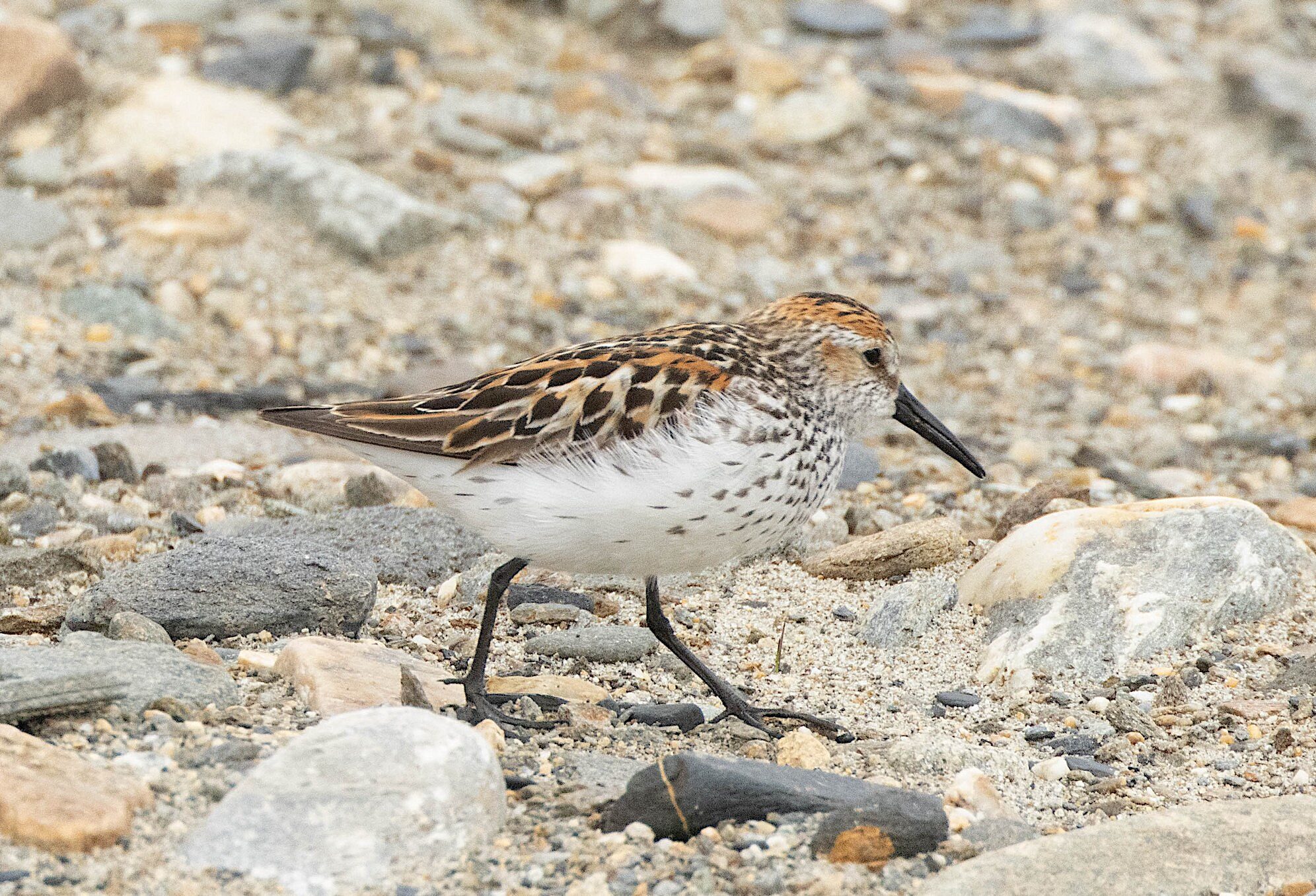
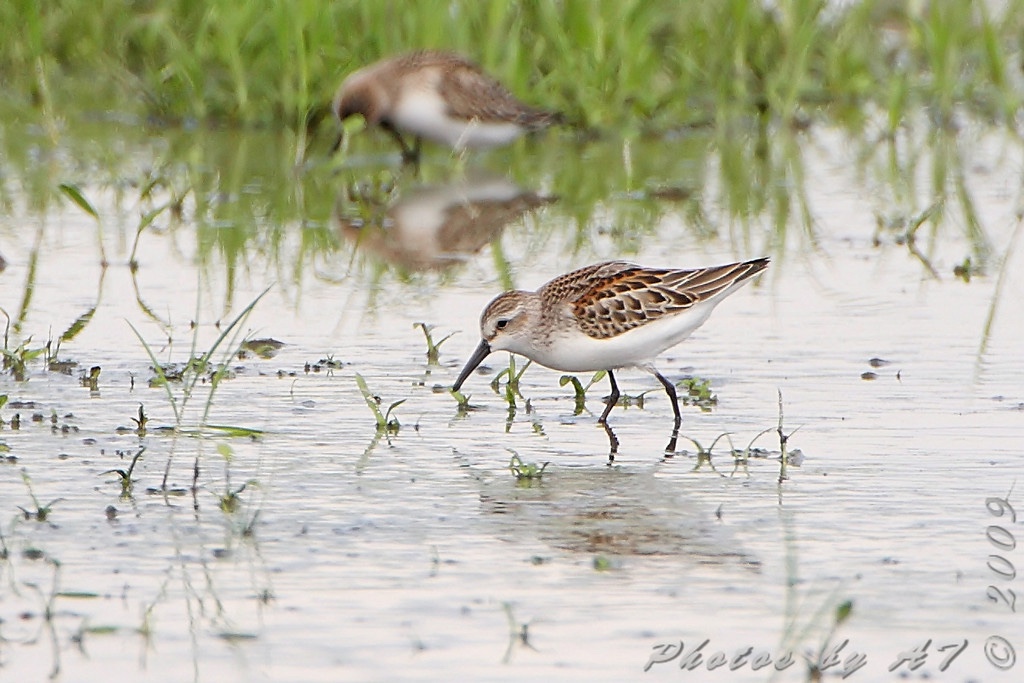
IDENTIFICATION: Bear with us here. Like Semipalmated, Westerns have blackish legs and partial webbing between the toes. To separate from Semis, start with the bill: it is usually deeper at base and tapered to a point, where it may droop a bit. In many Westerns (typically females) the bill is also long, and these birds stand out, like little Dunlin; but others (typically males) may have medium or short bills. The bills of Semis average shorter and straighter, but there is overlap, so not all Westerns can be told this way. Turning to plumage, (1) in spring, breeding-plumage Westerns have a striking rusty color on crown, face, and shoulders, with chevron-shaped spotting on the breast and sides, different from all other small shorebirds (see banner photo above); these are easy and may retain some of these marks into July-August (see below, left). (2) In August-September, juveniles have neat, fringed back and wing feathers, like a Semi but with one or two rows of rusty upper scapulars (shoulders) contrasting with grayer wing feathers below; these are the ones we see most often (see below, right). Rusty on scapulars will gradually molt away, but a touch of it may remain visible well into fall. (3) Later, all Westerns will molt into nonbreeding plumage, all gray above and white below with a little breast streaking; these are extremely similar to Semis except perhaps for the bill. Note that Semis leave the U.S. by mid-October; any later birds are probably Westerns, but a report of either species then should have photographs if possible. Some birds just can’t be identified. Note: Least Sandpiper can always be distinguished by its yellowish/greenish legs, among other characters, and all other sandpipers are larger.
ST. LOUIS STATUS: Very scarce in spring, April-May, but most should be in adult breeding plumage then or acquiring it, and identifiable by that. Adults returning south as fall migrants may appear in late July. Westerns are more frequent in August and September, mostly juveniles, with occasional birds thereafter that may be in gray nonbreeding plumage.
Learn more and listen to the calls of Western Sandpipers here.
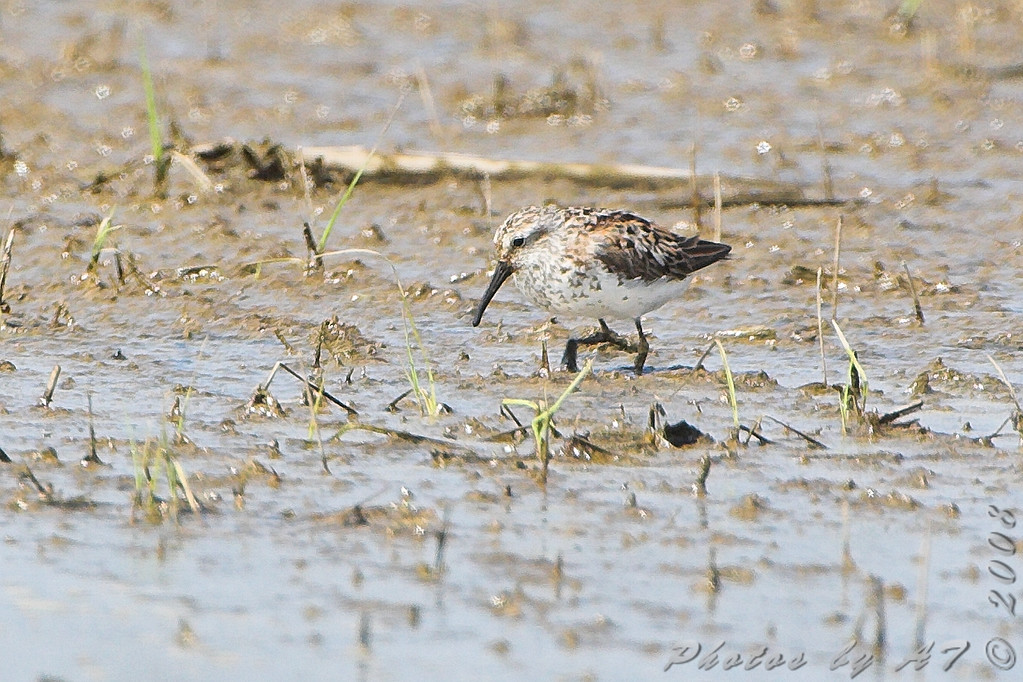
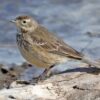
Molting adult in July: Note long bill with drooped tip, many remnants of breeding plumage
Photo Credit: Al Smith
Juvenile in August: Note medium-length tapered bill, neatly fringed back & wing feathers, rusty upper scapulars—and of course black legs.
Photo Credit: Al Smith