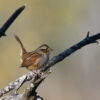

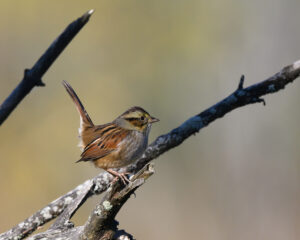
Swamp Sparrow. Photo: David Mollenhauer
Swamp Sparrow, Melospiza georgiana
Bill Rowe
The New World sparrows, family Passerellidae, are a diverse and important part of our bird life, with 19 species regular in Missouri—some in summer, some in winter, some mainly migrants, and some year-round. The Swamp Sparrow is a common one in migration and winter, but you have to look for it in the right places. As a summer nesting bird to our north, in Canada and the northeastern states, it is limited to wetlands, from cattail marshes to moist reedy or shrubby situations of all types, where its song, a sweet slow trill, is a characteristic sound. On migration and in winter, however, in the central and southern states and down into Mexico, it occupies a broader range of habitats and may be found in any dense, tangled patch of grass or shrubs, in addition to wetlands. It belongs to the same genus as the Song and Lincoln’s Sparrows— Melospiza, Greek for “song finch”—and you will often find Swamp Sparrows together with those species (especially Song) in good numbers when you explore their weedy fields, listen for their distinctive call notes, and make some spishing sounds to pique their curiosity. With persistence, you may find ten or more Swamp Sparrows where at first you didn’t realize there were any at all. In terms of total continental population, they seem to have done just fine over recent decades, or even to have increased a bit; some estimates, which are always rough and tentative, run as high as 20 million.
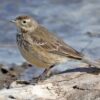
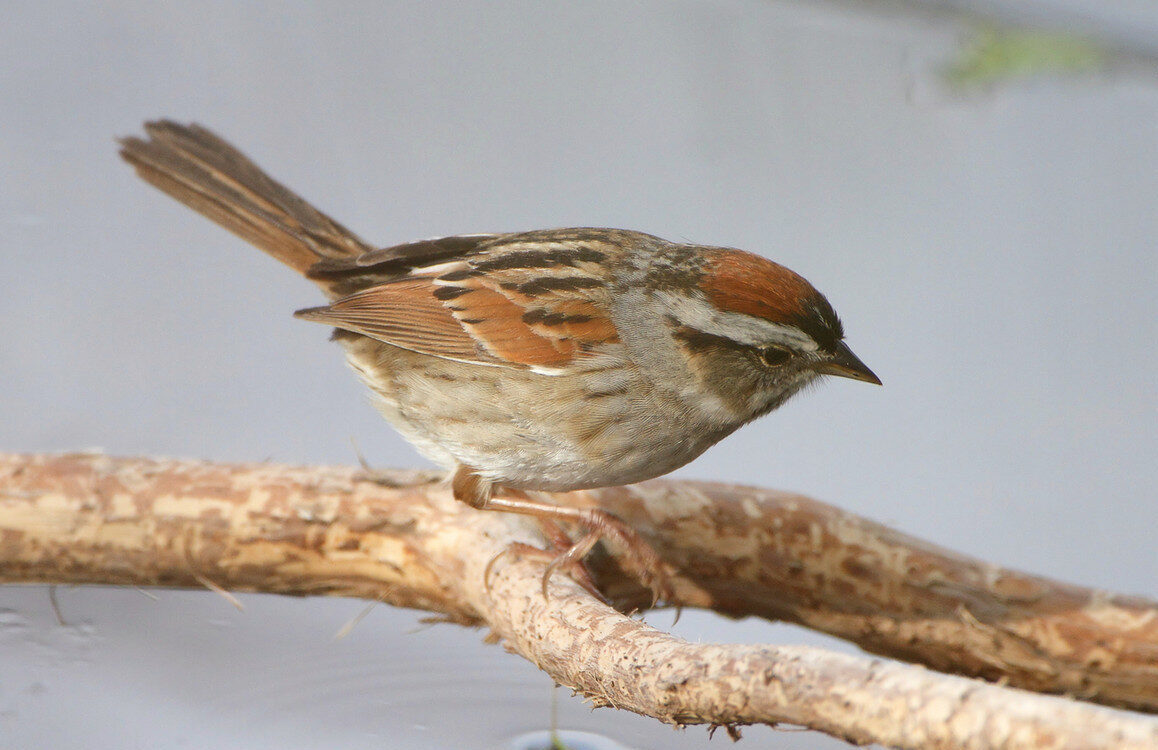
IDENTIFICATION: Swamp Sparrows are often confusing at first, but with practice their complex blend of colors will begin to click, even in a fleeting view. Fall and winter adults and immature birds look like the photos above and below, left: they are plump medium-size sparrows, rather dark, with gray on the face, collar, and breast contrasting with rusty-red on the wings, buffy-brown flanks, and a small, fairly distinct white throat patch. Breeding-plumage adults in spring look cleaner, with bright reddish crowns, but we see relatively few of those. The streaks on the breast and flanks are fuzzy and indistinct, unlike the streaks on a Song Sparrow (bold and contrasty) or a Lincoln’s Sparrow (fine and sharp, across a buffy breast-band); these also have less red in the wings. White-throated Sparrows are bigger with a wider white throat, bolder crown stripes, and white wingbars. The Swamp Sparrow’s year-round call-note is a sweet cheep or chink, unlike the Song Sparrow’s nasal chimp; this will often be your first clue to its presence.
ST. LOUIS STATUS: Common migrant, mostly March-April and September-November. Variably uncommon to common in winter in brushy and weedy habitats. Only occasional in suburbs, on the ground below feeders.
Learn more and listen to the songs and calls of Swamp Sparrows here.
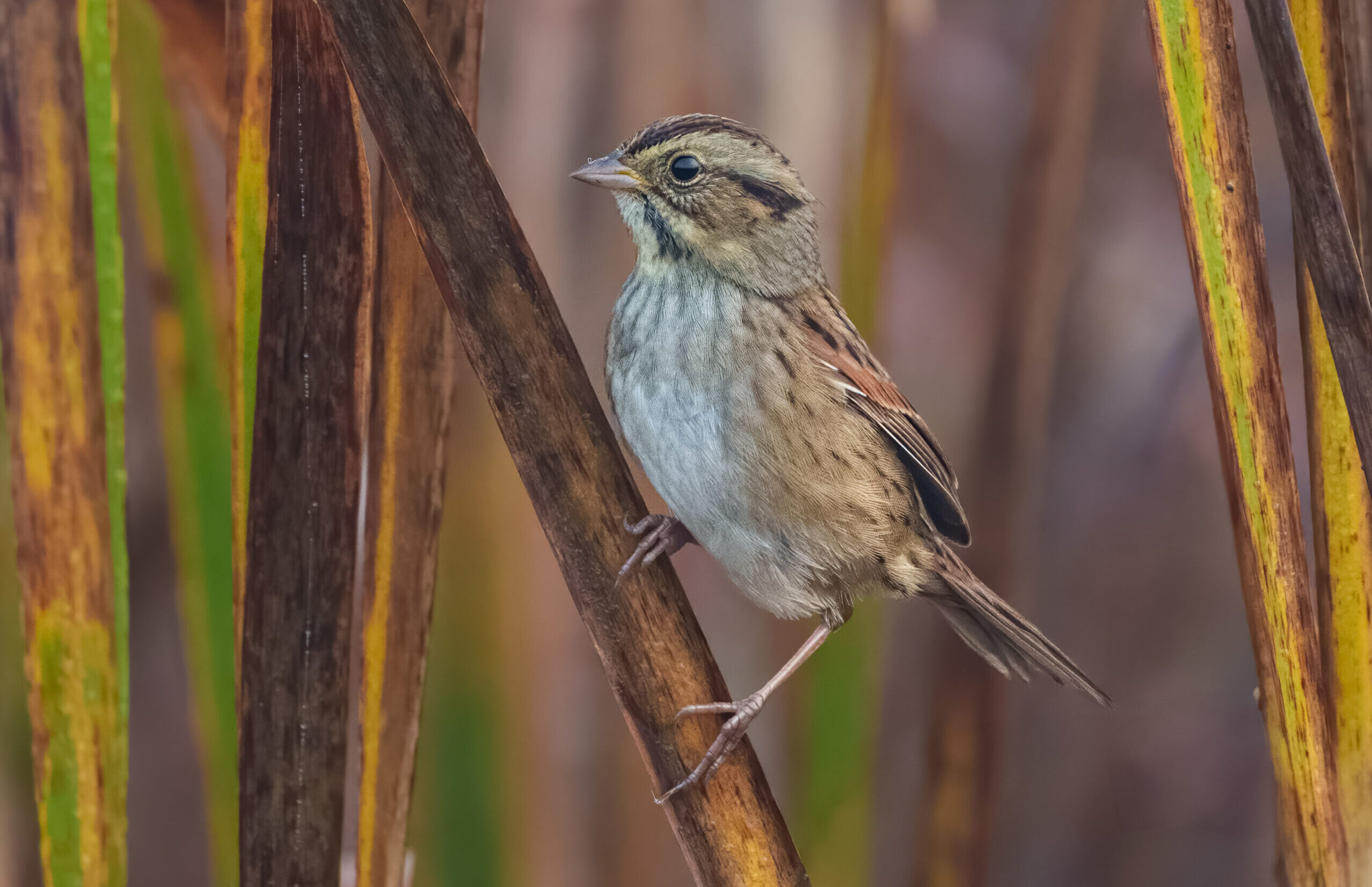
Another fall bird; note features mentioned in ID section, including vague breast streaks
Swamp Sparrow. Photo: Susan Ward
April bird, mostly molted into breeding plumage; note red crown
Photo Credit: Al Smith