
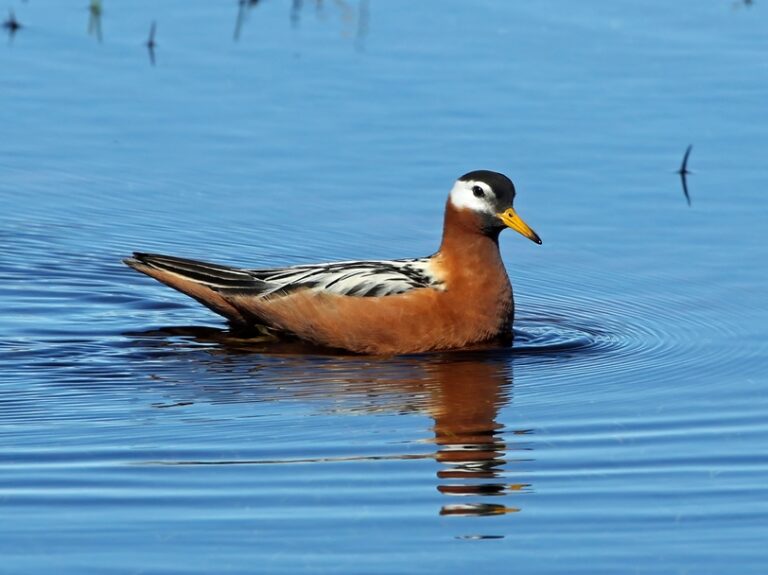
Red Phalarope, Phalaropus fulicarius
Bill Rowe
It’s time to introduce the phalaropes, a colorful group of three small shorebirds. One species, Wilson’s Phalarope, is strictly North American and also the commonest on migration here in the Midwest. The other two, the Red-necked and Red Phalaropes, are nesting birds of Arctic tundra in both the New World and the Old. Of these, the Red-necked is the more likely to be seen here even though its migration often takes place at sea, while the Red, even more maritime, follows offshore coastal routes to the southern oceans where it spends the winter, appearing anywhere in the interior only on rare occasions. That being the case, why are we covering the Red Phalarope first? Easy: because we’ve just had a visit from one at St. Louis, an interesting bird not only for its rarity but for its plumage. First, let’s note that all three phalaropes have handsome breeding plumages, and that the females are even more brightly colored that the males (unusual among birds). The female Red Phalarope in alternate (breeding) plumage is really stunning, as you can see in the photo above, and the male is red too, only a bit more subdued. Come late summer, however, like birds everywhere, they undergo a full molt of all their feathers; this produces a dramatic change, to a plain gray and white bird with a black face patch, which is its nonbreeding, or basic, plumage (below left). Exchanging one set of feathers for another takes weeks if not months, and in the interim each bird becomes progressively less red and more white and gray—and the bird that just visited us was right in between, as you can see by its picture below. The red is still there, but it’s patchier and mixed with white, while the back has some plain gray feathers already grown in. This bird is in the middle of “prebasic” molt. We should also note that the male-female plumage reversal applies to nesting as well: while both sexes work on building the nest, it is the male that actually incubates the eggs. Final note: All phalaropes swim more than they walk, and they often spin around in the water to stir up prey—fun to watch.
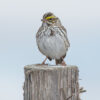
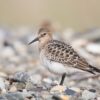
IDENTIFICATION: In breeding plumage, or at least with some red still showing on the body, a Red Phalarope is unmistakable. In nonbreeding plumage, it is very similar to a Red-necked Phalarope, with several differences: (1) A Red is a little larger, with (2) a bill of normal thickness for a sandpiper, while a Red-necked has a needle-thin, fine-pointed bill (caution: books exaggerate this, calling the Red’s bill “thick”, which it isn’t—it is just a bit less thin and more blunt-tipped). (3) Both have black bills, but a Red’s may retain some yellow at the base. (4) Most important, a Red’s back, when fully molted, is solid plain gray, while a Red-necked has pale stripes on a darker back (caution again: if a Red’s molt is incomplete, its back may look patchy, or appear to have dark streaks among the gray feathers). In other words, be careful with this one and get photographs if possible.
ST. LOUIS STATUS: Rare, appearing singly at irregular intervals, usually in fall migration (September-November) and typically in nonbreeding plumage. A majority of the records come from Carlyle Lake, with about 8-10 scattered records elsewhere in our area. The earliest in fall, with breeding color still evident, was the bird that showed up about two weeks ago, July 26-27, at Riverlands.
Learn more and listen to the calls of Red Phalaropes here.
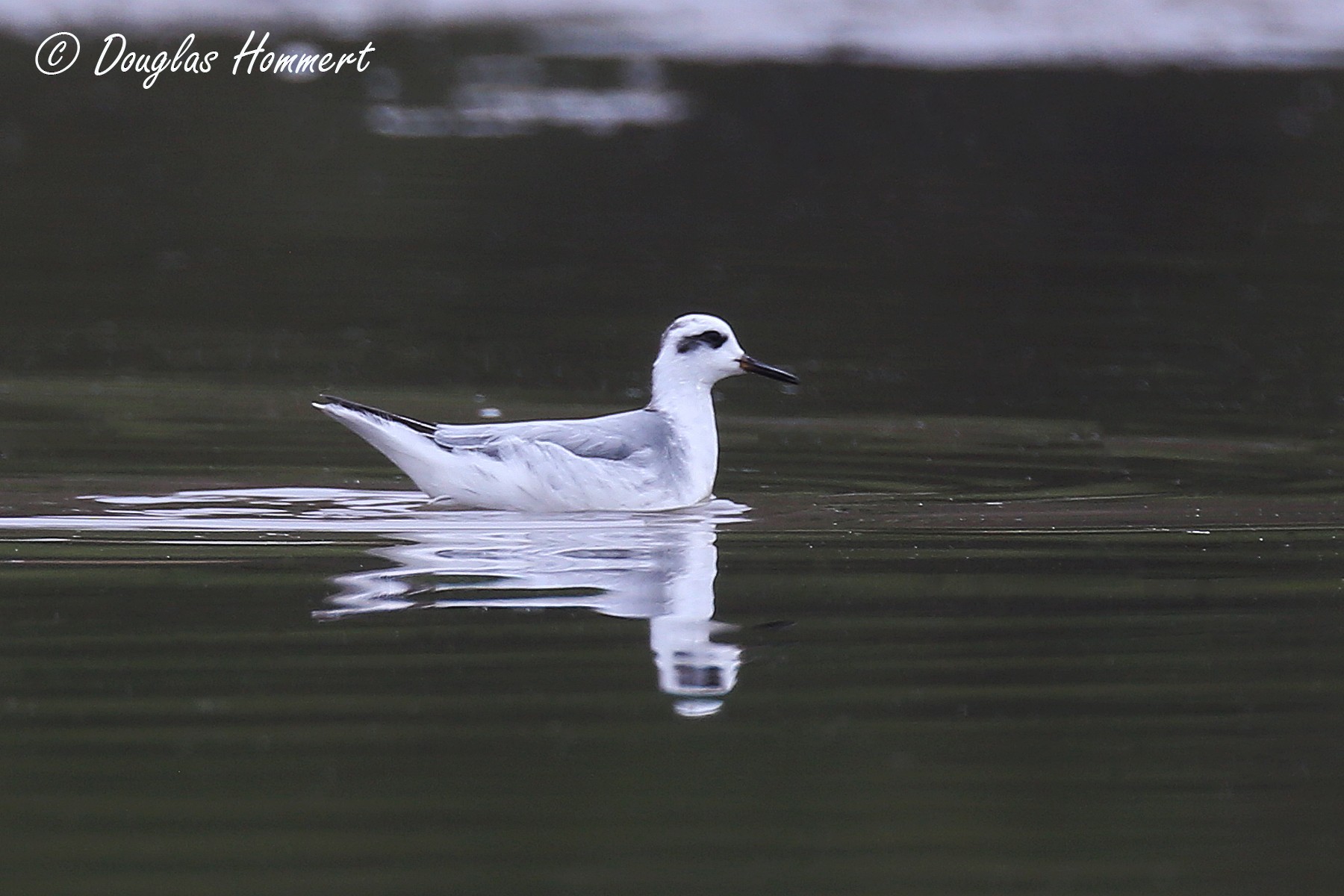
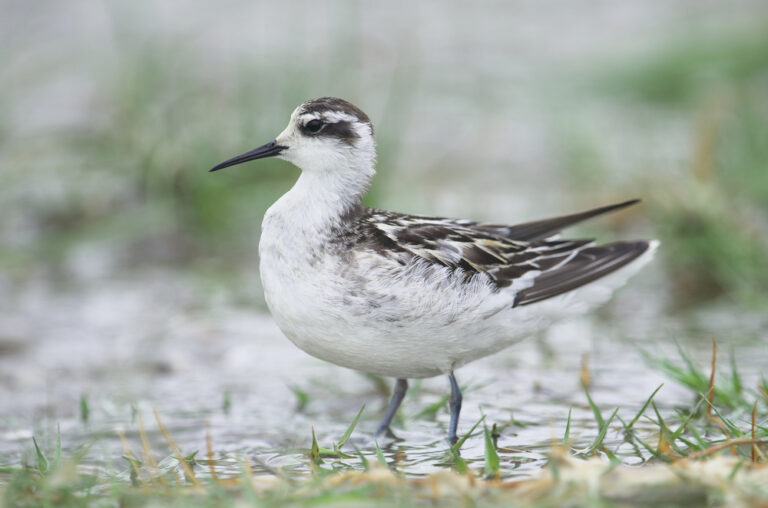
Nonbreeding Red: note plain gray back, bill shape, etc.
Photo Credit: Doug Hommert
Nonbreeding Red-necked: note differences from Red (see ID section)

Riverlands bird in prebasic molt, July 26; see main text above
Photo Credit: Andy Reago & Chrissy McClarren