
American Pipit, Anthus rubescens
Bill Rowe
Some readers may be wondering…what is a pipit, anyway? The fact is that pipits are not always easy to find and observe in our part of the world, and they don’t come to feeders. They are small, thin-billed birds of open country that feed mostly on the ground and blend in with it. They belong to their own genus Anthus—a large one, with about 45 species all around the globe, on six continents. Here in North America, however, there are only two widespread species; one of those, Sprague’s Pipit, is a shy prairie bird, limited mainly to the Great Plains. The American Pipit, by contrast, occurs all over the continent and offers us chances to see it in various habitats and seasons. Its summer breeding range extends all across the high Arctic tundra in Canada and Alaska, and it follows this cold, treeless habitat down mountain ranges like the Rockies, at ever-higher altitudes as you go south. In Colorado, for instance, it is one of a handful of bird species that nest on the alpine tundra above 11,000 feet. Elsewhere, it is seen only on migration, coming through on its way to spending the winter in the southern U.S. and Mexico. Here in the Midwest, spring and fall may bring us flocks of pipits that land and feed almost anywhere, but usually in wetter grassy areas or crop fields, along river and lake edges, or on mudflats along with shorebirds, walking about and bobbing their tails as they go. While small numbers are typical, some pipit flocks can reach the hundreds. The American Pipit has a close cousin, formerly considered a subspecies of it but now a full species (Siberian Pipit), that nests in Siberia, winters farther south in east Asia, and shows up occasionally along our Pacific coast and in Alaska.
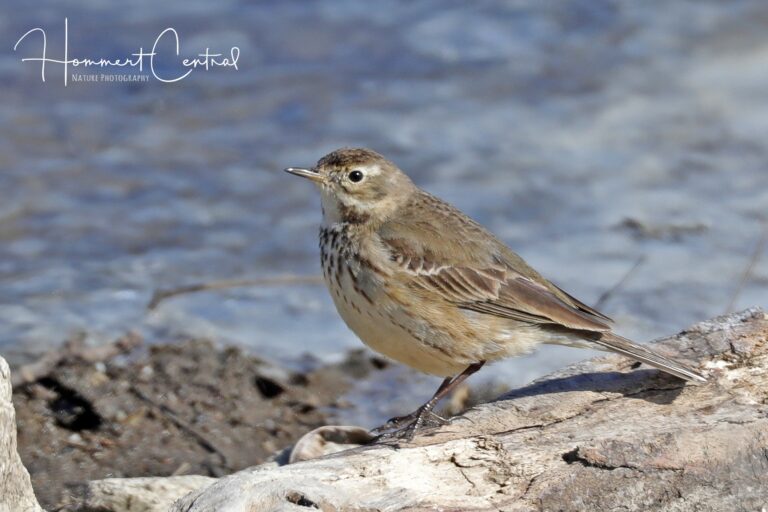
IDENTIFICATION: A little bird with a short, thin, pointed bill and a medium-length tail that it bobs persistently as it forages by walking around (not hopping). In fall, the upperparts are gray to brown, with wingbars, and the breast is whitish to buffy with variable amounts of streaking. Spring migrants and summer breeding birds tend to be grayer with less streaking and a pinkish tinge below, but the species is quite variable at all times. The legs are always dark. White outer tail feathers that show up in flight are a constant feature in all plumages but do not, by themselves, identify a pipit, as many birds of open country have them (e.g., Horned Lark, longspurs). American Pipits call attention to themselves in flight with a high, squeaky call that can sound like pseet or peep-it.
ST. LOUIS STATUS: Overall, an uncommon and unpredictable migrant, seen primarily March to mid-May in the spring and September to November in the fall, in farming country and around wetlands as described above. Occasional pipits may stay as late as December or arrive as early as February.
Learn more and listen to the calls of American Pipits here.
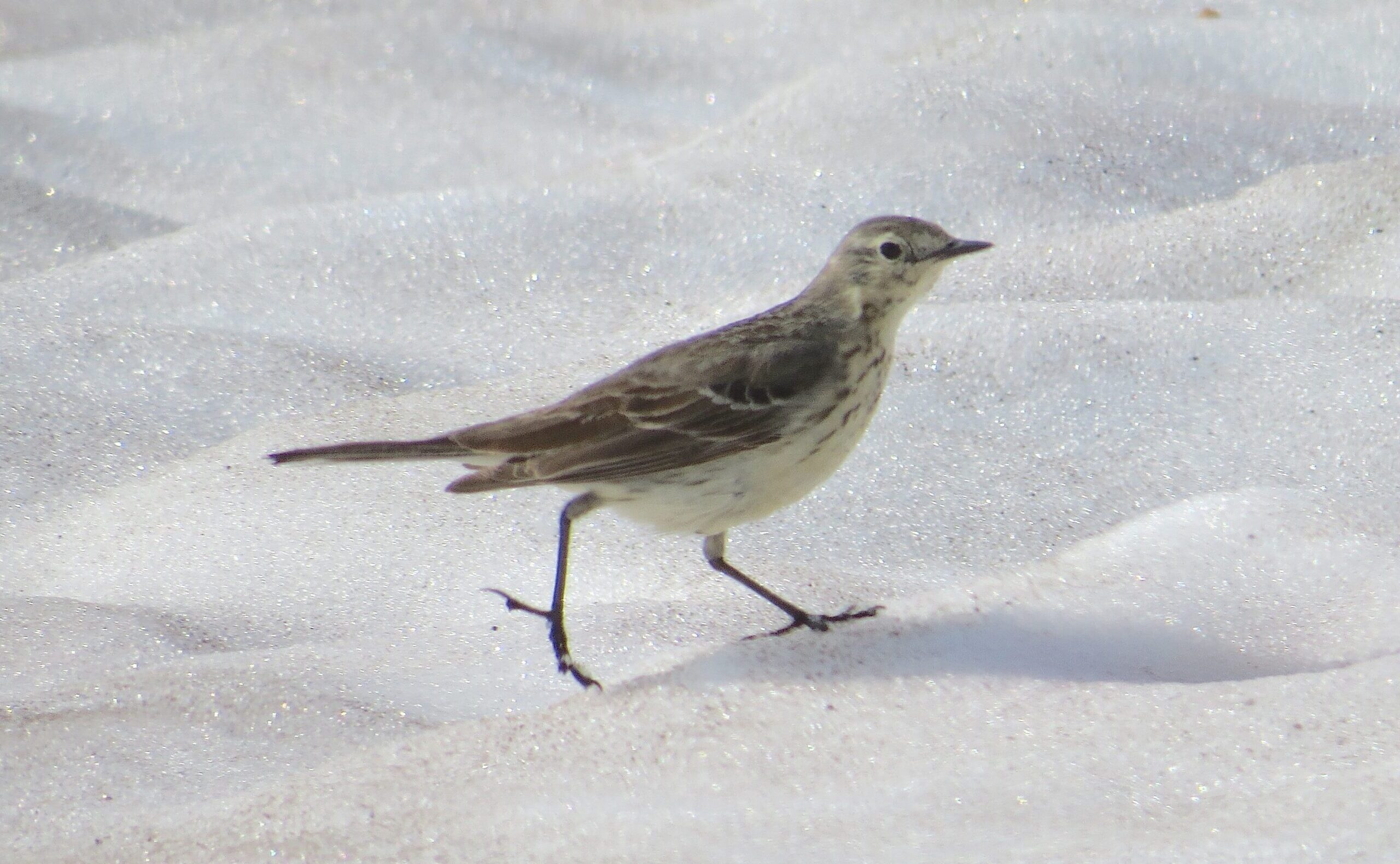
Breeding plumage, summer in the Rockies (Montana, July)
Photo Credit: Bill Rowe
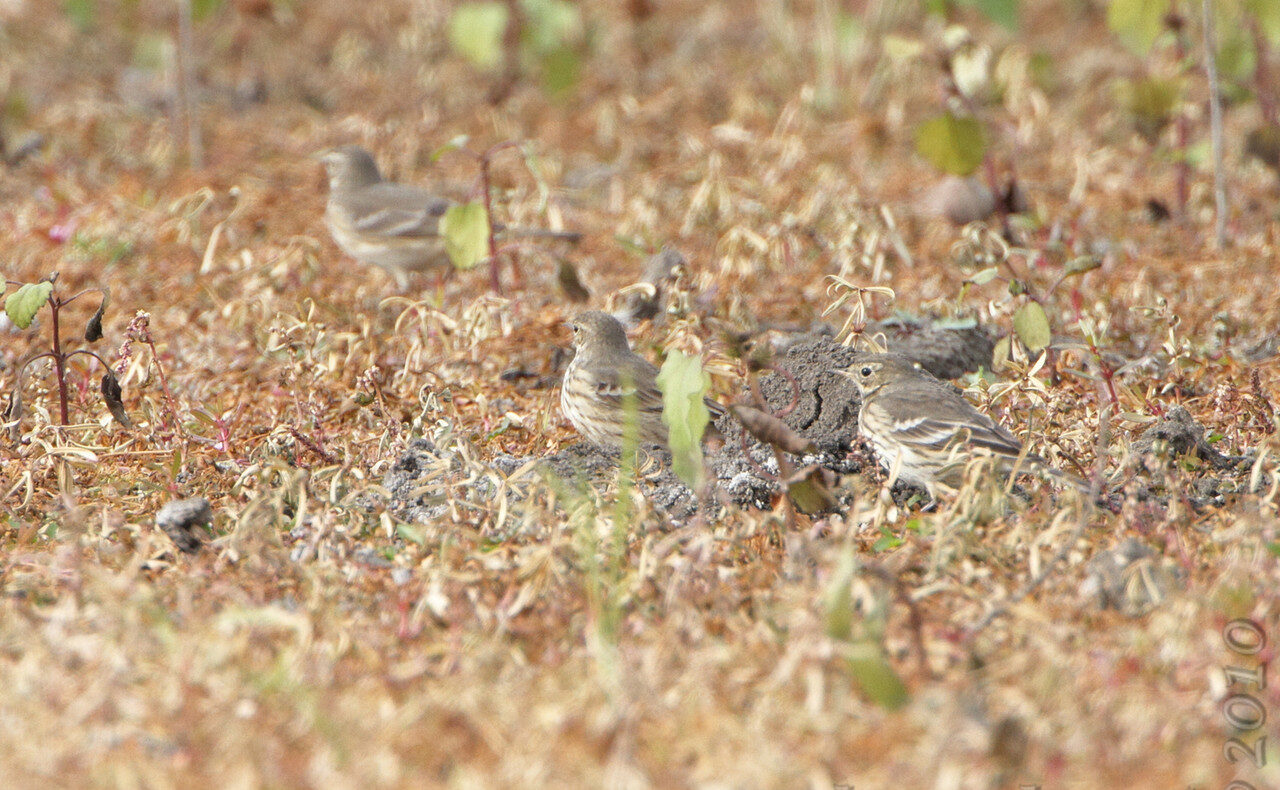
Pipits in the grass
Photo Credit: Al Smith